September 2024
Earlier this year Cllr Anne Rickard was elected mayor of Bridport for the second time, and confirmed at the ‘mayor making’ ceremony in June.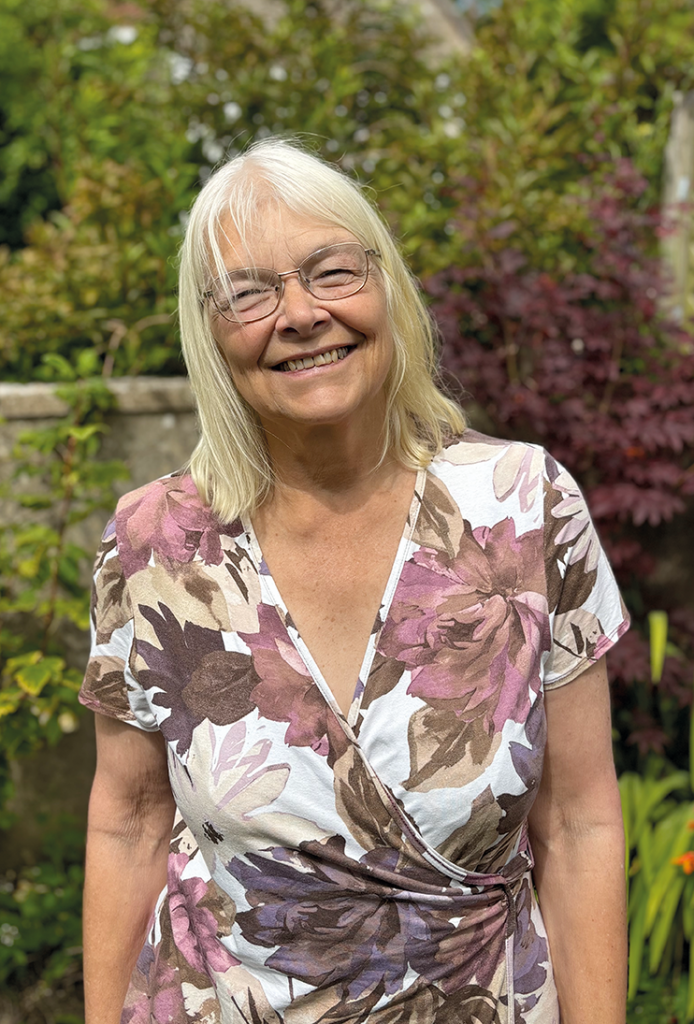
Now she has settled into her role, we got together with Anne to hear about her interesting life and her hopes for the year ahead…
The Bridge: Anne, you’ve been mayor once before, in 2017–18. Has anything about the role changed since then?
Anne Rickard: The role itself hasn’t changed at all. It’s very special and a lovely position to have. My mayoral routine varies but on average I go to about three events a week. I have my own secretary who looks after my diary and organises events with back-up from the town council staff. They all work well together – it’s a great team of people who love their jobs. Everyone’s doing it for the town and nobody’s on their high horse!
TB: The town council itself has changed, though, with the absorption of the former parish councils and creation of new ‘wards’. What does that mean for Bridport residents?
AR: Yes, the new council is twice the size! The new structure just makes sense and will draw us all closer together. My husband Dave [also a town councillor and former mayor] and I have lived in Bothenhampton for 18 years and have always felt we were in Bridport, never a village or separate parish.
I understand that some people are unhappy about the increase in the precept element of their council tax – it’s always been higher in central Bridport, and that rate now applies across the board – but overall this change is absolutely fair and the right way to go. We should expect to share the costs of running the town we all use and love.
Bridport Town Council has paid staff, and much of the parish work was done by volunteers, who were often not elected for lack of people coming forward. An election confirms that your electorate have put trust in you, and I also think prospective councillors should make their political affiliation and views clear, as it gives voters some idea how their representatives are likely to react to various issues. I’m very pleased to be part of our fully elected council.
We have a really good set of councillors now. We’ve lost a few through age or ill health, so new people have replaced them, bringing new ideas. There’s always a bedding-in period, but the council looks exciting, with some very clever people who are keen to be active and make a difference.
TB: In your first term as mayor you declared Bridport to be a Rights Respecting [RR] Town – the first in the country. How did this come about and what does it mean?
AR: The idea came from pupils at Colfox School who were fed up with the assumptions people were making about them because of their age – they would often be refused entry to shops, for example. Many schools across the country are RR, and it has a really positive effect on young people’s behaviour and attitudes, as they consider the responsibilities that go hand in hand with their rights. Our young people went a step further and asked the council to consider widening the RR approach across the town. Now, in every process and every project, we all ask ourselves: Does this ‘feel’ RR? It’s very important to me.
TB: You’ve chosen three local causes as your mayoral charities for the year. What are they and why are you supporting them?
AR: Two of the charities – Bridport Youth & Community Centre (BYCC) and Home-Start – benefit young people, something that’s close to my heart. Their work reflects the town’s Rights Respecting ethos, too. Home-Start supports families with young children, while BYCC provides activities, events and clubs for young people. My third charity is Read Easy, which helps adults improve their literacy skills. I used to be a Read Easy reading coach until I just got too busy, and I have so much respect for the important work they do. I wanted to support all three of these excellent causes.
TB: What are the biggest challenges facing the people of Bridport today?
AR: There are multiple challenges – energy price hikes, the housing shortage, climate change… we need the whole system to start working together. Now we have a different central government, as well as a Lib Dem-led Dorset Council and town council, I hope things can change.
One example is the planning laws: our old buildings need insulation and better windows, and there need to be fewer restrictions so this can happen. Also, it’s hard to get new homes built when there’s more money in retirement properties and homes for elderly people. We need young people to live here and run things, but so many either can’t afford it or can’t find a suitable place. We’re facing a dearth of opportunities for young people to stay in their home town. The new government will impose housing targets, which gives me hope. We need to be able to make things happen, although it won’t be quick or easy.
I’d like to add that the town’s surveyor, Daryl Chambers, and our town clerk, Will Austin, have for a long time managed to make things happen despite some tricky planning obstacles. They’re part of a very strong team and do really well.
TB: How did you come to settle in Bridport and get involved in public life?
AR: I’m from Sidcup, Kent, and Dave grew up in London. We lived in the South East for years, near the M25, and we knew we’d like to move to a different area at some point. When our circumstances changed we took a leap and moved to Martinstown, where we lived ‘the good life’ in a very special old house. We kept chickens, pigs, orphan lambs – it was a big adventure! My older son and daughter had already left home but this was a wonderful place for our younger son, Chris, to grow up.
It was music, and the lack of a motorway, that first drew us towards Dorset, and after those fruitful years in Martinstown, we realised Bridport was calling. Chris had got himself a job in a computer shop, and then got into the music scene. He loved it – he’s an ace keyboard player, even if I say so myself – and the older musicians were very welcoming and encouraging. We discovered the heart of this town and just had to move here. We felt the eccentricity, differing opinions, sense of humour, sense of never being afraid to be slightly bonkers and the freedom to just be yourself would suit us well, and we felt welcomed from the start. The local Lib Dems wanted Dave to stand as a town councillor, and in the end I got involved too.
TB: Do you have any passions outside local government and improving people’s lives?
MC: Definitely music, although I don’t perform so much now. I’ve always loved singing and I sang with Orpington Junior Singers when I was young – we did concerts, festivals and even some radio and TV appearances. That was my life from the age of 12 into my 20s, and after that I always found it difficult to join another choir. When Dave and I got together, he introduced me to the folk scene. What an eye- (or ear-!) opener this was! We performed in several different line-ups, all over the country and even made several recordings – we had so much fun.
When we came to Dorset, I was asked to join an all-female trio, Dangerous Curves, and we ended up performing together for 12 years including a trip to the USA. We sang close harmony with lots of comedy. All this gave me so much confidence and to be honest I think it made me a different person.
Music is definitely a lifelong passion, even though I don’t perform now. Dave and I still jive!
The Mayor’s Blog is online at www.bridport-tc.gov.uk/category/mayors-blog.