March 2026
In late November a resident of Swyre noticed a strange-looking nest high up in a tree.
The nest had the same look as a wasp nest but was much bigger and in a more exposed position than a wasp nest would usually be found. The resident reported the nest to the National Bee Unit (part of Defra) and it was taken down for analysis.
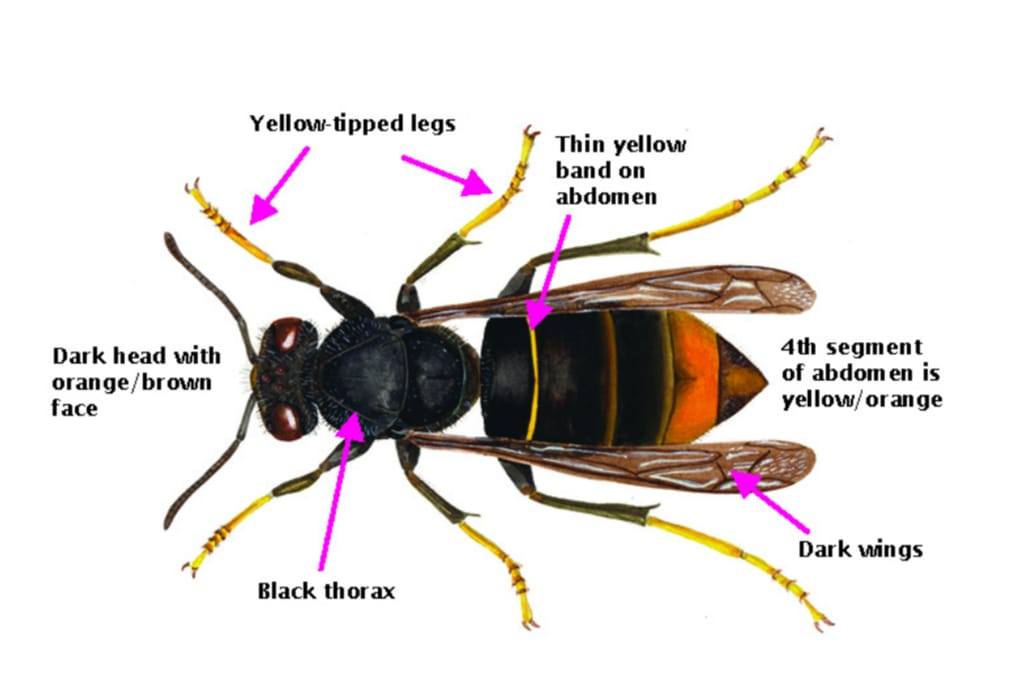
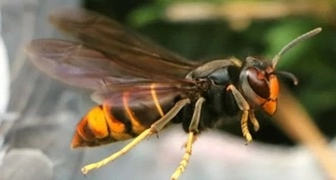
The nest was made by the yellow-legged Asian hornet, an invasive species that’s a voracious, highly efficient predator. It was first found in France in 2004, having probably arrived in a consignment of pots from China. Since then it has spread into much of Northern Europe and, since 2016, England and more recently Ireland. Last year 161 nests were found in England, with 544 individual sightings, more than the previous six years combined.
The yellow-legged hornet (YLH) has no natural predators in the UK and poses a significant threat to honeybees and all native insects. An average nest can consume over 11kg of insects per year. While the YLH mainly eats bees and wasps, it will also take many other insects. This has an impact on the ecology of the local area; it has already altered the biodiversity in France.
A single hornet is unlikely to cause injury if left alone, but they can become very aggressive if their nest is disturbed – so stay a distance of at least 10 metres away.
This hornet is not just a problem for beekeepers, so we need eyes on the ground everywhere – towns and cities, parks and woodland areas, ports, marinas, garden centres, orchards, vineyards, parks, timber yards, fruit and veg wholesalers, transport hubs and gardens.
Primary nests are about 5–10cm in diameter and are found in sheds, garages, porches, bird boxes, hedgerows and brambles.
Secondary nests will be built close to primary nests, usually within 100m. These are usually found in the tops of trees, but those built lower down – in hedges, bramble patches, utility boxes, etc. – are a danger to anyone who might accidentally disturb them. They can be very difficult to spot when concealed by vegetation.
One nest can produce 350+ queens, some of which will begin new colonies the following year.
The YLH presents one of the biggest threats to UK honeybees and other pollinators in a generation. Sightings should be reported, complete with an image if possible, via the Asian Hornet Watch app (available for Android and iPhone wherever you get your apps). Locally, contact your local Asian hornet team at asianhornet@westdorsetbees.org.uk for advice and confirmation of a sighting. The National Bee Unit will then follow up reports and destroy YLH nests.
Article by Peter Crabbe, Chairman, West Dorset Beekeepers’ Association
Diagram below by Sarah Bunker