October 2026
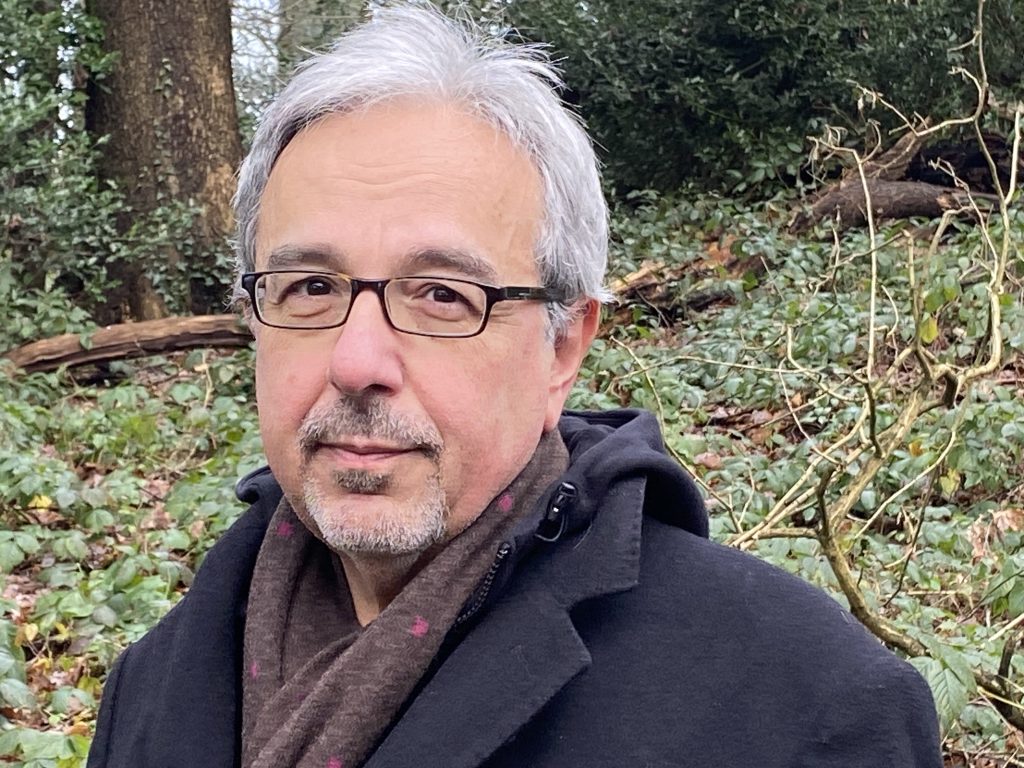
As well as his academic writing, clinical psychologist Frank Tallis has published four science books for the wider market. The latest is Wise, which explores ways to maintain psychological wellness and a sense of purpose in midlife and beyond.
At this year’s Bridport Literary Festival he will be talking to philosopher Julian Baggini about the book. We caught up with Frank in advance of the festival to learn more about the book and how best we can make peace with our mortality.
The Bridge: What can people expect from your session at the Bridport Literary Festival?
Frank Tallis: Well, that rather depends on what I’m asked. But I’m hoping we’ll be discussing a range of topics included in Wise, which deals with achieving good psychological health in the second half of life. The book covers subjects such as mortality, the psychology of spirituality, and altered states of consciousness.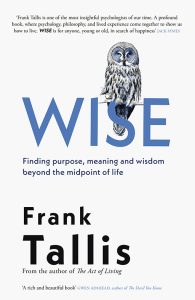
TB: Who did you write Wise for?
FT: People who have reached midlife or beyond and who are looking for an alternative to the standard self-help prescriptions. There’s no shortage of advice: We’re told to eat well, exercise, get plenty of sleep, socialise, keep intellectually stimulated, and avoid toxins. It’s all excellent advice but the problem is we already know it. I think that today, when people ask how we should go about meeting the challenges of later life, they are probably looking for something more thoughtful, philosophical or spiritual. They seem to be wanting more than 10 top tips. They seem to be wanting the answer to the question: How can I live wisely?
TB: Society tends to associate the classic ‘mid-life crisis’ with men, with clichéd ill-advised choices reflecting the desperate denial of mortality. Have you observed different patterns in how women face the transition into the second half of life?
FT: Although men and women face different challenges (men don’t have to deal with the menopause, for example) I’m far more interested in commonalities than differences. I’m much more interested in how we, that is all of us, come to terms with difficult aspects of existence – mortality, loss, finding purpose and meaning, etc. Gender-specific psychology is very important, but I’m not sure that it is very useful when dealing with universal questions and issues.
TB: Clearly a degree of introspection, of self-awareness, is necessary for durable mental health, particularly as we age. Is this a middle-class luxury? There’s a proven link between economic disadvantage and poor mental health in midlife. How can your profession help people who are just trying to keep on top of the practicalities of life?
FT: Psychologists and psychiatrists recognise that the harsh realities of the world impose severe limitations on what is achievable in psychotherapy. That said, to describe psychotherapy as a middle-class luxury is inaccurate and it also underestimates how powerful and useful psychological insights can be.
The psychiatrist Viktor Frankl – who spent time as a prisoner in several Nazi concentration camps during WWII – observed that fellow prisoners who found life meaningful, even under such horrific conditions, tended to survive for longer. You don’t have to be middle class, wealthy, or living in very favourable circumstances to make use of psychological knowledge. Frankl went on to develop a meaning-based therapy, and an incalculable number of people have been helped by just reading his extraordinary memoir, Man’s Search for Meaning.
TB: What single factor determines good mental health – ‘wholeness’ – in later life more than any other?
FT: When you look at the writings of the great psychologists, they all seem to agree that wholeness is the essential condition for mental health in later life. You can think of a human being as a set of polarities (for example, mind/body, conscious/unconscious, reason/intuition) and the more integrated these are, the more mentally healthy and resilient the person seems to be. This idea is well supported by neuroscience. Divisions within the self are associated with poor mental health, whereas integration or wholeness is associated with good mental health. Fortunately, psychologists like Carl Gustav Jung have explained in practical terms how integration and wholeness can be achieved.
TB: Is it ever too late to find one’s way out of “the dark wood” and enjoy fulfilling last years after a lifetime of mental struggle?
FT: Interestingly, most of the great psychologists are optimistic about what can be achieved in old age. In the last chapter of my book, I summarise the work of Lars Torstam, a Swedish sociologist who studied well-adjusted older people and identified an extremely healthy subgroup he called the ‘geotranscendent’. Broadly speaking, they are contented, have made their peace with mortality, engage in productive self-reflection, and have a pro-social outlook. Torstam was inspired by Jungian psychology and believed that ‘geotranscendence’ is a state that we can all aspire to.
TB: You’ve said that music is one of your passions (the others being psychoanalysis and cake). Which composer’s music speaks most directly to your soul?
FT: I’ve always been fond of Bach. However, as I get older, Mozart becomes increasingly important to me. It’s a cliché, but there is something quite divine about his music. When I listen to Mozart, my head seems to fill with light. I adore the piano concertos – all of them – and The Magic Flute is my favourite opera. And then there’s Mahler. His orchestral song ‘Ich bin der Welt abhanden gekommen’ (‘I have lost track of the world’) is sublimely beautiful and speaks to my soul directly, because it is surely about the soul leaving the body.
Event 30, Tuesday 10 November at 12 noon in The Bull Ballroom. Tickets £12 from bridlit.com
Frank Tallis also writes crime fiction, including the Max Liebermann mysteries, and horror fiction under the name FR Tallis.