September 2026
Abbotsbury Swannery is home to the only managed colony of mute swans in the world.
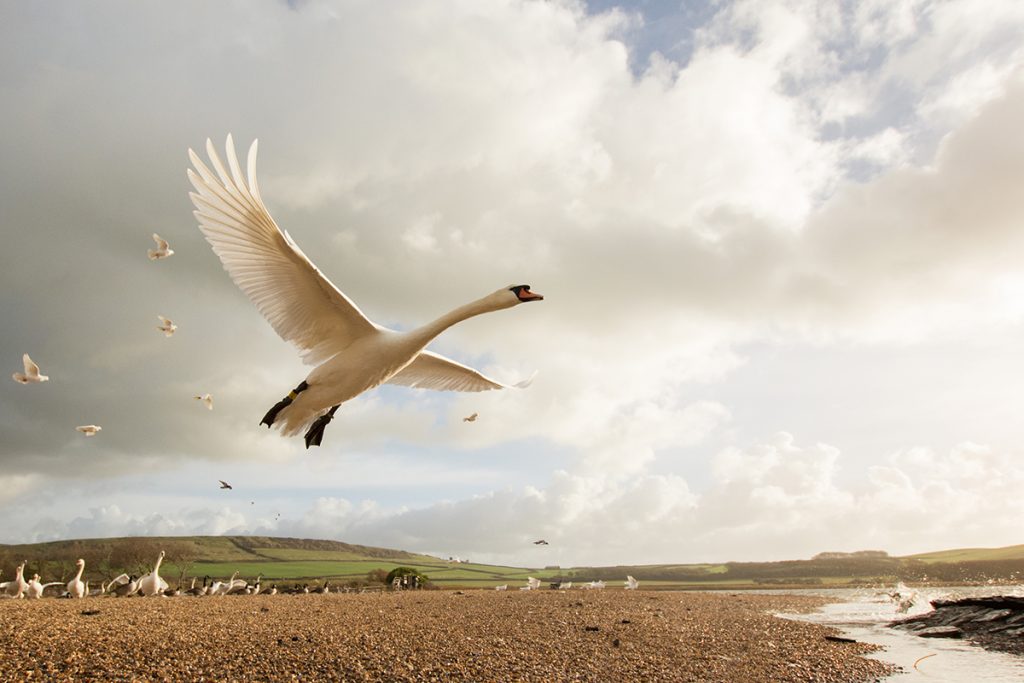
There are about 600 resident swans and this number more than doubles in the winter when food elsewhere is scarce and birds come from up to 60 miles away to nest and feed. Seeing these beautiful large creatures gathered together at feeding time, or in flight over the 25-acre site, is truly awe inspiring.
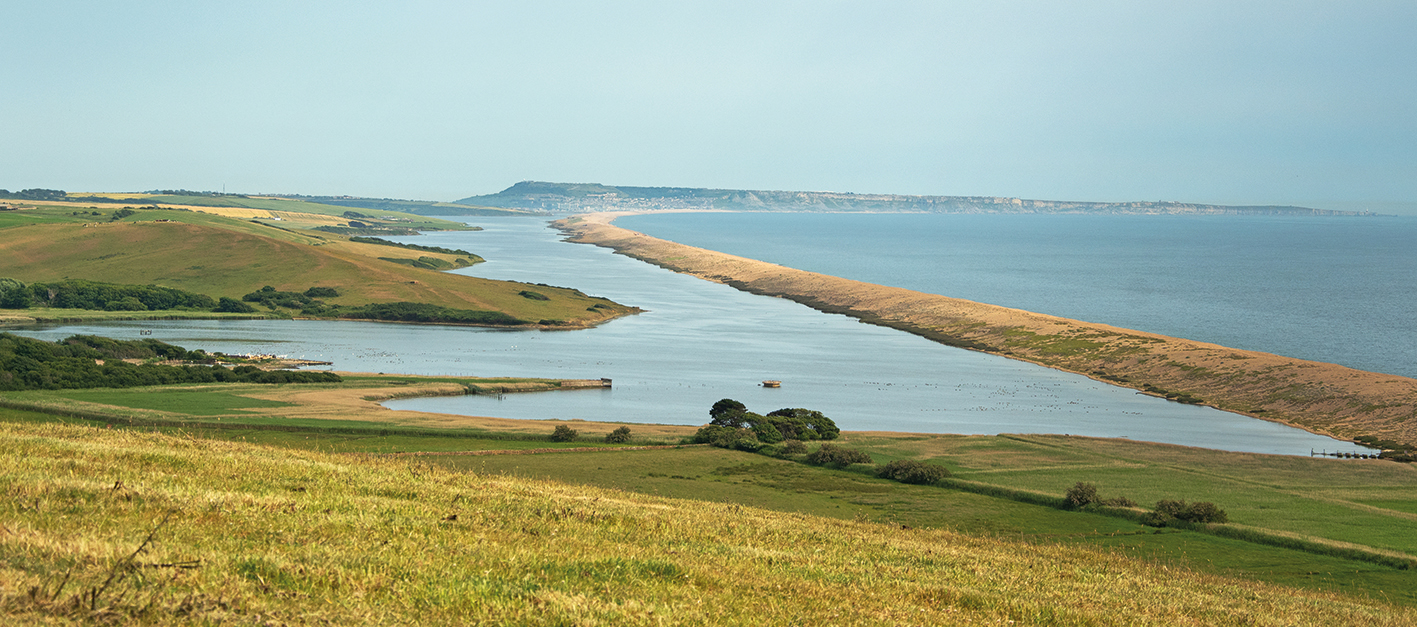
The swannery is at the north-western end of the Fleet lagoon, the famous stretch of tidal seawater between Chesil Beach and the mainland, running from Abbotsbury down to Ferry Bridge just above Portland. This water and its banks form the Chesil and Fleet Nature Reserve, which is a protected Site of Special Scientific Interest (SSSI) and an important area for wildlife thanks to its unique habitat and abundant food sources.
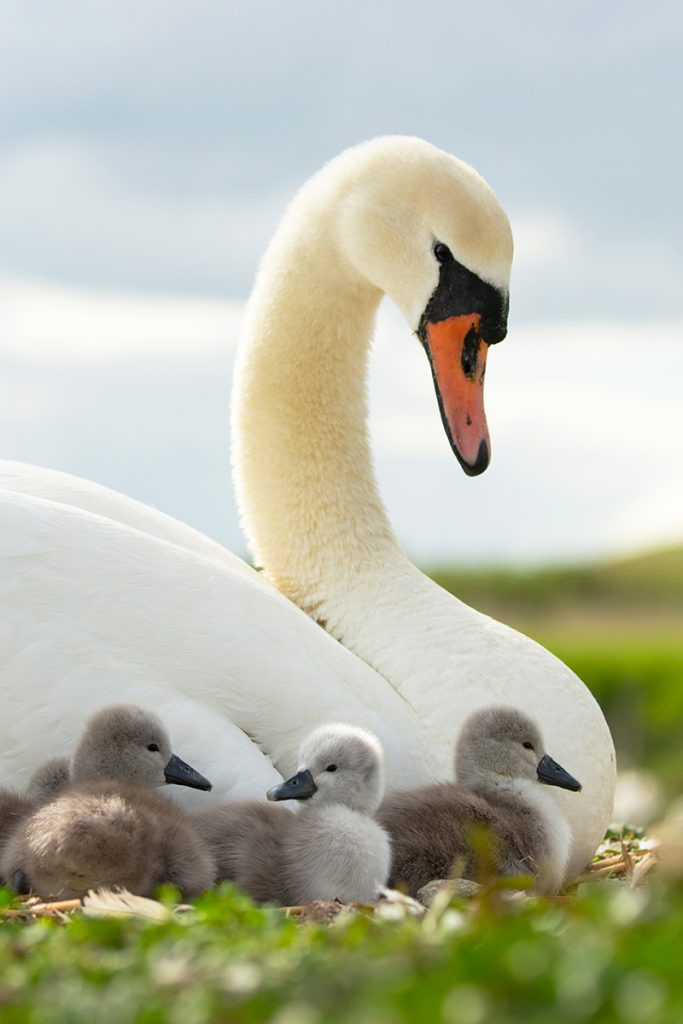
The salinity (saltiness) of the lagoon varies from most salty at the Portland end to fresh water at Abbotsbury, and this is one reason for the swans’ presence. “The birds need fresh water for their young, which are known as cygnets,” says Charlie Wheeler, manager of the swannery and warden of the Chesil and Fleet Nature Reserve. “Swans have a desalination gland near their eyes that allows them to ‘filter’ salt water, but this gland doesn’t work effectively until they are about five months old.” Additionally, the lagoon’s shallow water is full of eelgrass, which the swans like to eat.
Swan management at Abbotsbury dates back to the 14th century and probably further – the earliest written record references William Squillor, the ‘keeper of swans’ in 1393, when the birds were kept for eating at the nearby Benedictine abbey, which was founded around 1040. “There’s an old tale about the Catholic monks eating swans to get round strict rules governing their diet,” says Charlie. “No one knows for sure, but whatever the reason, they took advantage of the site’s natural attraction for swans and farmed them for their meat.” This went on until the dissolution of the monastery in 1539.
Charlie has been ‘the boss’ at both the swannery and the nature reserve since 2018, having worked at both sites for many years before that, including during his three-year degree course in animal behaviour and welfare at Kingston Maurward. His team also includes Steve Groves – the only swanherd in the world! – and another permanent staff member, plus six seasonal workers and occasional work experience students.
Charlie spends four days of his working week at the swannery, and Wednesdays on the reserve. It’s busy: the swannery attracts 50,000 visitors each year, including locals popping in, families on holiday nearby, and passengers disembarking cruise ships at Portland and coming up by coach. The site has displays giving lots of fascinating information, two footpaths leading to the water’s edge to see the swans, and a daily 4pm feed that visitors can get involved with. And of course the gift shop and cafe are important attractions, too.
So what about Charlie’s work at the Fleet and Chesil Reserve? “My colleague Angela and I manage this eight-mile nature reserve, working to protect and preserve the diverse habitats for future generations,” he says. “Part of this is to manage access; unfortunately, when you have a lot of people accessing such a sensitive site, both the wildlife and the habitats can get damaged. The South West Coast Path, which runs parallel to the Fleet, has access points to the foreshores, and when people come onto these areas they can trample vegetation and disturb wildlife such as waders and waterfowl. When this happens frequently, birds will often leave the site as they are having to use too much energy avoiding the disturbance. We want people to enjoy this wonderful location, but it cannot be at the expense of the fauna, flora and habitats that make it so special. It may seem a small thing, but asking everyone to enjoy the nature reserve from the footpath allows the undisturbed foreshores and wider areas to thrive, meaning there is more to see and enjoy.”
The reserve is also a very important site for research, with projects being carried out throughout the year by people from a wide range of scientific fields. “Our role here is to support this work and to advise on the site’s nature conservation interests, its sensitivities, health and safety considerations and more,” says Charlie. “We also have to ensure the research is justified, and ask for SSSI consent from Natural England.”
Back to Abbotsbury Swannery, and what does the future bring? “We’re continually aiming to enhance the site and we introduce new elements each year. We are always conscious of the swannery’s history and heritage, so new features mustn’t overpower the site’s peaceful tranquillity. We also like to engage with children, so we aim to balance the wild, natural world with some interactive activities they can enjoy as part of their visit. Over the past few years, we have collaborated, designed and built the Brambly Hedge interactive family trail; we also have our pedal go-karts in the lower field and our swan-shaped living willow maze, which is very popular with all ages.”
Of course, the swans are the real attraction. These beautiful birds have captured the imagination of artists, writers and poets for centuries – not least because they pair up for life, giving us a romantic ideal to dream of – and are sacred in many cultures. We are lucky to have Abbotsbury Swannery on our doorstep, so try and pay the swans a visit before the season ends and see them at their best.
Abbotsbury Swannery is open daily from 10am to 5pm (last entry by 4pm) from mid-March until the end of October, when it closes for the winter.
Standard tickets are £15 for adults and £7.50 for children (under-fives are free) but there are frequent special offers such as £1 entry for children during the summer holidays and in May for seeing the cygnets. There are also season tickets and a special price for combined entry to the swannery and Abbotsbury Subtropical Gardens.
Huge thanks to Charlie Wheeler for allowing us to use his beautiful photos with this article.
www.abbotsburyswannery.co.uk
www.wheeler-photography.co.uk