July/August 2026
There is a new collaboration between Bridport’s Community Orchard Group and Nature Buzz, a community interest company working alongside the social prescribing team at Bridport Medical Centre.
Nature Buzz began with a simple idea: that time spent in close connection with nature, especially with bees, can support wellbeing, bring calm, and help people feel more grounded in themselves and the world around them.
Building on a space that already holds strong ecological and community value, Nature Buzz has carefully added to the orchard’s existing apiary and pollinator areas to create more of a community space around the bees – something for local people to enjoy and become involved with.
A key part of this has been the creation of the Hum Hut, a small purpose-built space designed for calm, sensory engagement with bees. Inside the hut, people can experience the sound of the hive and the gentle inhalation of beehive air. It is a quiet, bee-free space where people can feel the natural rhythm of the bees without disturbance.
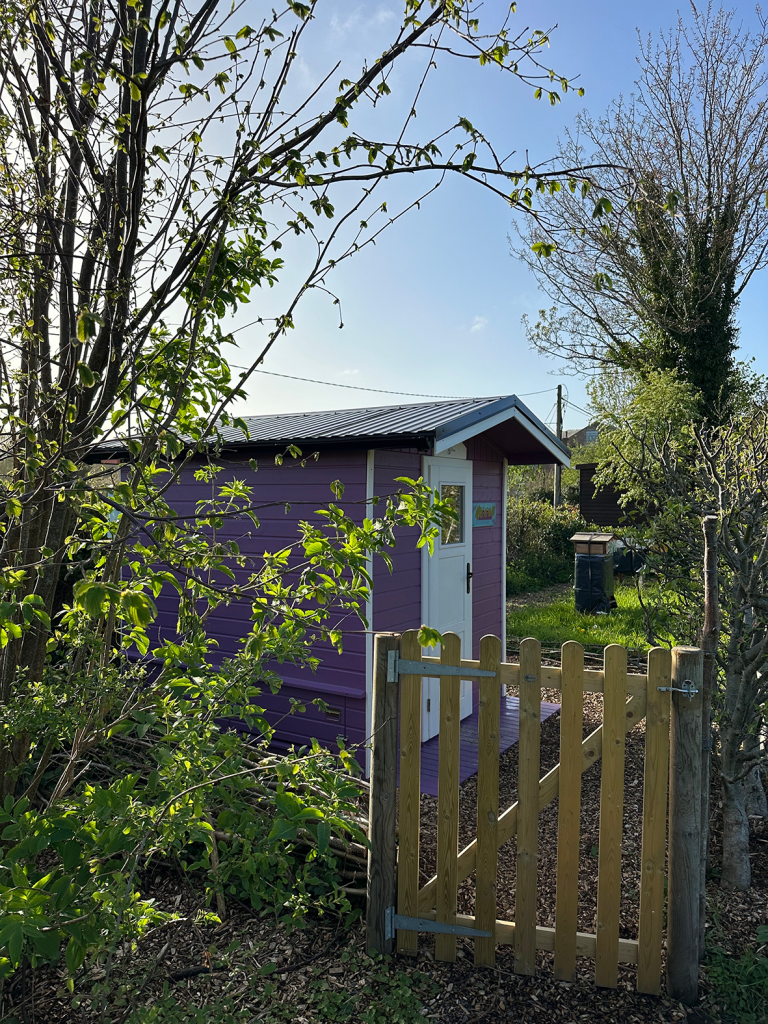
“Many people find this experience deeply grounding,” says Helen Bolter-Griffin from Nature Buzz. “The hum of the hive, combined with the warm, living air of the bees, creates an immediate sense of stillness and calm.” Apitherapy huts originated in Eastern Europe centuries ago, and in the UK people have often found sanctuary sitting by the bees in quiet contemplation and communion.
One of the most compelling things about bees is that they cannot survive alone. A single bee is fragile, but a colony is strong. Bees live and work entirely for the good of the whole hive, in a shared system of cooperation, care and balance. Many people find this interdependence deeply moving, especially in a world where independence is often prized above connection.
Working with the orchard team, Nature Buzz has also improved access around the apiary, so that more people, including those with reduced mobility, can spend time near the hives. Alongside this, the group has developed safe nesting spaces for bumblebees and solitary bees, and planting designed to provide reliable food sources throughout the year. These pollinators are essential to the orchard and the wider landscape. Healthy bee populations depend on healthy ecological systems, so there are also enhanced areas for other insects and invertebrates to underpin the entire ecosystem.
Supported by the Woodland Trust, the team have planted a double hedge with pollinator- friendly saplings to improve wildlife habitat. The addition of the Bee Bar highlights the need for water in any wildlife space, and is a delightful spot to watch bees collecting water.
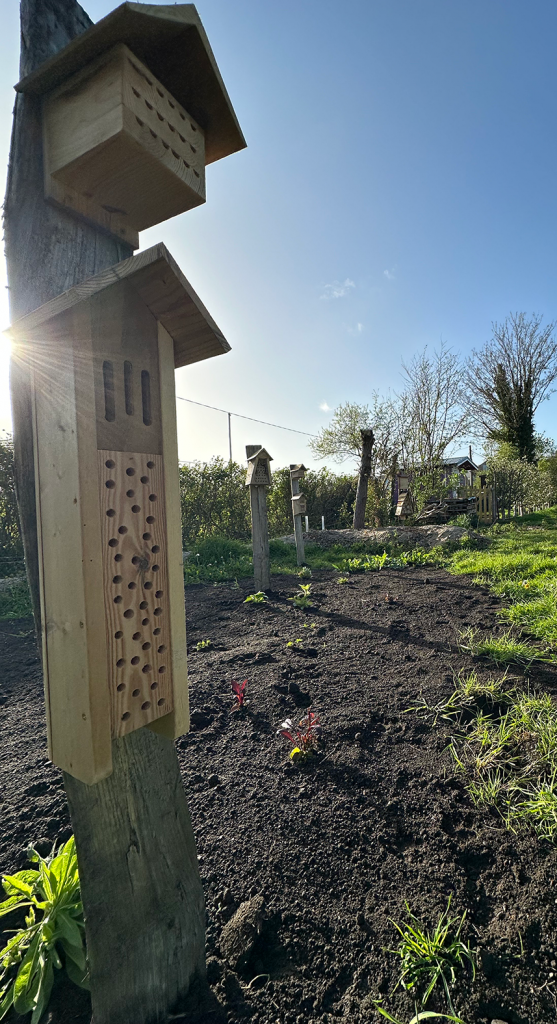
The Hum Hut and wider apiary work were possible thanks to financial support from Clipper Teas and volunteer support through the SAMEE charity. Community groups Ripple and Conquest Art contributed the beautiful artwork that adorns the hives. Their support has helped link the project to other local groups, as well as helping to create something unique – a space where bees and people can meet in a calm, sensory way that supports both wellbeing and ecological awareness.
“This is what social prescribing through nature can be like – not clinical or complex, but quiet, sensory and accessible,” says Helen. “Bees become part of that experience, offering a living rhythm that people find restorative. Sitting listening to bees, and being present with the hive, can create a simple but powerful shift in attention, bringing people into the present moment in a way that feels natural.”
Nature Buzz is now seeking funding for information panels about bees and their habitats, to help people visiting the orchard to notice more of what is already happening around them and encourage similar habitat creation at home. The team are also exploring ways to fund the development of guidance and resources to share the model with other community orchards and similar projects.
“We are very grateful to have been part of this collaboration, alongside a community that already cares deeply for land, bees, and biodiversity,” says Helen. “More than a finished project, it’s an evolving relationship, one where bees, people and place continue to support one another over time.”
Thanks to Helen Bolter-Griffin, Gareth Flux, Nicole Collins and Alison Todd for this article