February 2026
At the end of World War 1 there was a severe housing shortage.
Prime Minister David Lloyd George launched the Homes for Heroes initiative to construct inexpensive council homes for returning service members, prompting Bridport Town Council (BTC) to launch a house-building programme financed by the 1919 Housing Act subsidies.
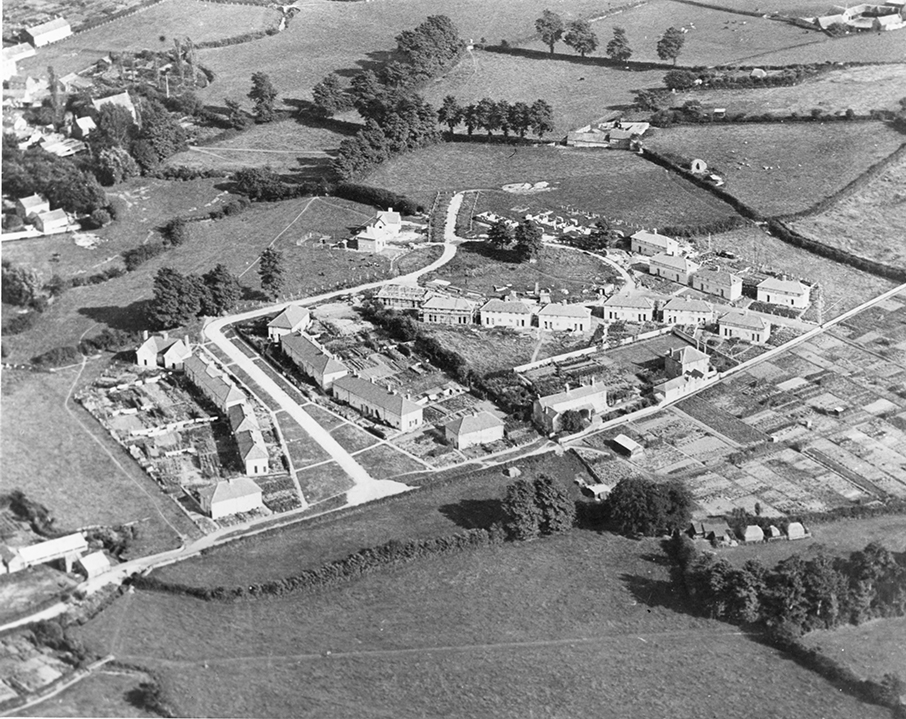
BTC bought land that had been part of Skilling Farm, on the slopes of Skilling Hill – which at the time was outside the council’s boundaries – and proposed building 60 to 70 houses on the site, although the government would require 278 from BTC overall.
The council commissioned architect Barry Parker, who was best known for his collaboration with Raymond Unwin (his half-cousin) and their significant contributions to the Garden City projects of the early 20th century including Letchworth and Hampstead. The main idea behind this movement was to enable the occupiers of these houses to lead more fulfilling lives, in turn improving society itself. They followed two main principles in house design: first, that houses for all classes must be designed for quality; and second, they must encourage healthy lives.
When Parker and Unwin dissolved their partnership in 1914, Parker began working on town planning projects. He insisted on complete control over the planning, design and building of this ‘garden suburb’ in Bridport. In order to allow residents to walk to the mills where they worked, he decided to limit the size of the community. He took great pleasure in creating homes with spacious gardens, allowing families to grow their own food and providing space for the children to play.
The houses at the northern end of Alexandra Road were the first to be built (1920–23), with houses in Queens Road next (1923–27). Unfortunately, because of delays, promised funds were not forthcoming, and the Housing Subsidy Act expired before all of the dwellings could be completed. The Ministry of Health refused to pay towards a gas main and to permit use of septic tanks for drainage.
When the first occupants moved in in 1923, the homes lacked heating, cooking facilities and hot water. A few private residences had been built along Coronation Road by the middle of the 1930s. Many interlocking estates and the addition of semi-detached, detached and flats between the 1950s and 1990s expanded the development.
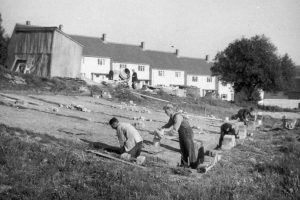
Marilyn Sealy, who now lives in West Bay, recounts her time living in one of the properties in Alexandra Road. “We were lucky to have a three-bedroom house,” she says. “I remember my mum and brother-in-law planting a hedge on the property – a hedge which is still there today. We all had to help cut it with shears. There were fields nearby with cattle and where the shop is now was once an abattoir. It was a lovely place to live, everyone knew each other.”
Skilling’s role in the development of Homes for Heroes, and its connection to Barry Parker – one of the most well-known Arts and Crafts architects of the early 20th century – is significant. It also serves as an example of how the ‘garden suburb’ concept continued well into the 20th century.
Article by Amy Stephenson, Ward Clerk, West & Allington Ward.
Photos courtesy of Bridport Museum Trust.